
In procurement, conversations are often shaped by numbers, specifications, and compliance requirements. But sometimes, visiting the source reminds us that behind every raw material are people, landscapes, and livelihoods.
This is the story of Batu Tojah Village in Murung Raya, Central Kalimantan, where patchouli cultivation became part of a larger effort to restore land and strengthen community resilience.
The Beginning: Transforming Reclaimed Land into Productive Farmland
The journey began with a unique challenge. Through its Corporate Social Responsibility (CSR) initiative, PT Maruwai Coal (Adaro Minerals) sought to transform rehabilitated former mining land into productive farmland that could create long-term value for the surrounding community. The program provided initial farming capital, agricultural inputs, and helped organize local farming groups.
However, turning post-mining land into productive farmland takes more than good intentions. It requires technical understanding, practical support, and long-term commitment.
This is where Taru Wangi became part of the journey. Our role was never simply to wait at the end of the harvest as a buyer. We entered the field from day one, working alongside farmers to navigate the realities of post-mining land cultivation.
Rather than standing only at the end of the supply chain, we became involved from the beginning, supporting a system designed not only to grow patchouli, but to maintain quality and continuity over time.
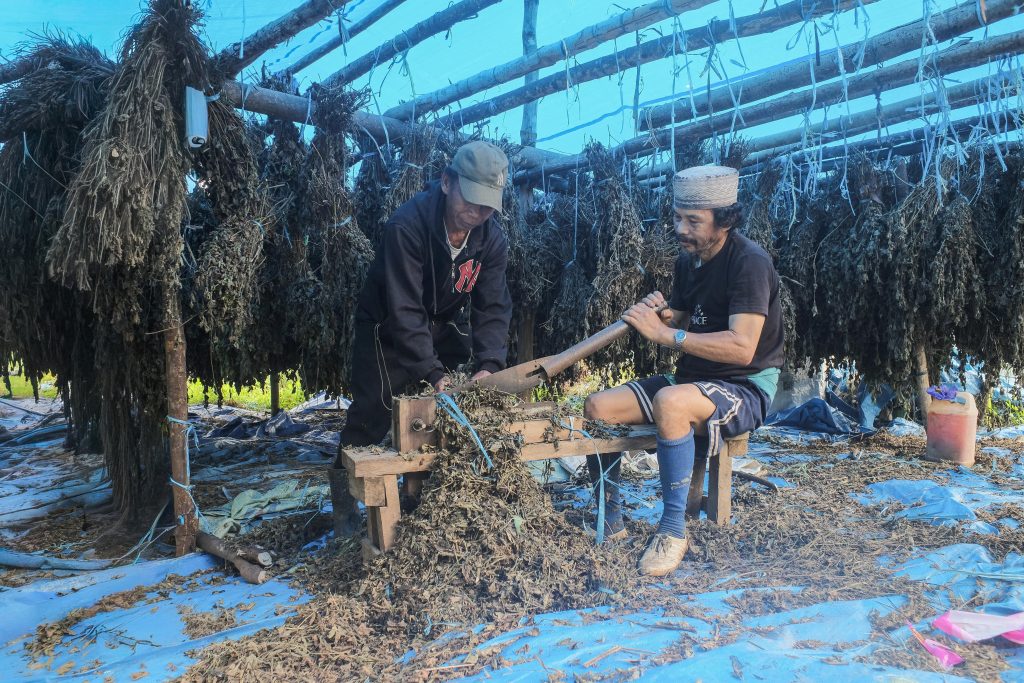
Building Quality Through Shared Knowledge
Creating a reliable and traceable supply chain meant staying involved at every stage of the agricultural process. Together with the Batu Tojah farming community, an end-to-end approach gradually took shape, centered on both quality and long-term sustainability.
Restoring the Soil
Land preparation techniques were adapted to help rehabilitated soil better support healthy patchouli growth and long-term cultivation.
Selecting the Right Genetics
Carefully selected and resilient patchouli varieties were introduced to better suit local environmental conditions.
Improving Post-Harvest Practices
Rather than relying on direct sun-drying, farmers adopted proper shade-curing methods to better preserve the integrity of the oil glands within the leaves, an important step in maintaining oil quality.
Strengthening Local Distillation Standards
Steam distillation units using stainless steel equipment were introduced and standardized to help maintain cleaner, more stable, and iron-free patchouli oil.
This effort was never just about improving yields. It was equally about building local capability and creating a system where quality could be maintained consistently over time.
A Partnership Designed to Last
Many community initiatives flourish during the launch phase, only to slow down once attention fades. Batu Tojah has been different.
The partnership remains active to this day: farmers continue cultivating and distilling patchouli, while Taru Wangi continues receiving patchouli oil from the community as part of an ongoing relationship.
What began as a CSR initiative has gradually grown into a long-term, functioning supply chain.
The Meaning of Traceability
When looking at the patchouli oil produced through this partnership, it becomes clear that traceability is not only about documentation. Working directly at origin creates a deeper understanding of where materials come from, how they are cultivated, and the people involved along the way.
In Batu Tojah, patchouli oil represents more than an agricultural commodity. It reflects a process shaped by collaboration, continuity, and shared responsibility over time.
One of Many Stories Across Indonesia
Batu Tojah is only one of many stories unfolding across Indonesia. Every region presents different landscapes, challenges, and lessons, but the principle remains the same: staying close to origin, working alongside farming communities, and growing together over time.
Because responsible sourcing begins long before the oil reaches the drum.